
Official FVD (Force Vector Design) Thread
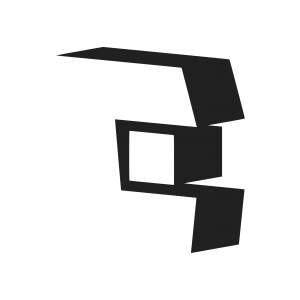
My internet is currently too crappy to watch a video but if you mean this one, here's what I got:


That looks about right. Kinda hard to tell though cuz that picture is really, really small lol. Even when I open it in a new window. :D
Let me try to fix that.
Edit: Fixed it.
Also for reference I used 100kph at the anchor as well as 3.5g normal force
That looks good. I've used the quintic double bump function in the past but never thought to try it on a Stengel dive. You can really create some nice elements if you use them correctly. I'll give it a try. Thanks!
@Emonadeo, thank you! I'll be sure to use this to improve the shaping of my drop.

I think I finally ended up with something that's not too bad.
But now I seem to be running into another issue. In FVD++, the g forces are different than what is actually happening in the simulator, even though all of my values between the two are the same. Help?
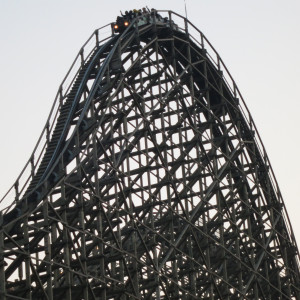
That's usually because in FVD++, you see forces as they would be from the center of gravity. Given any one single point on the track, the front car will usually be traveling at a different speed as it reaches that point than the center car or back car would be, leading to a difference in forces. (Think of how you hang over the top of a drop from a coaster's front car while you get whipped over it from the back car -- it's because the entire train travels at the speed that the center of gravity would be traveling regardless of any single car's position relative to each other.)
This is also part of the reason why there can be mild lateral forces on certain elements even without the addition of lateral Gs in FVD++. The seats are all offset from the center of gravity, in addition to being offset from the heartline. This can cause them to travel a path that creates laterals.
It's not really something that you "fix" (because FVD++ doesn't know how long your train is), but it is something that you can work around by keeping it in mind while making your ride.
I had trouble making a proper Ampersand so I instead invented something I would consider calling an Inverted Ampersand :D

Looks pretty cool! Though, if you're still stuck at trying to make a proper Ampersand, here is a brief outline of one I made a while ago for one of my rides :)
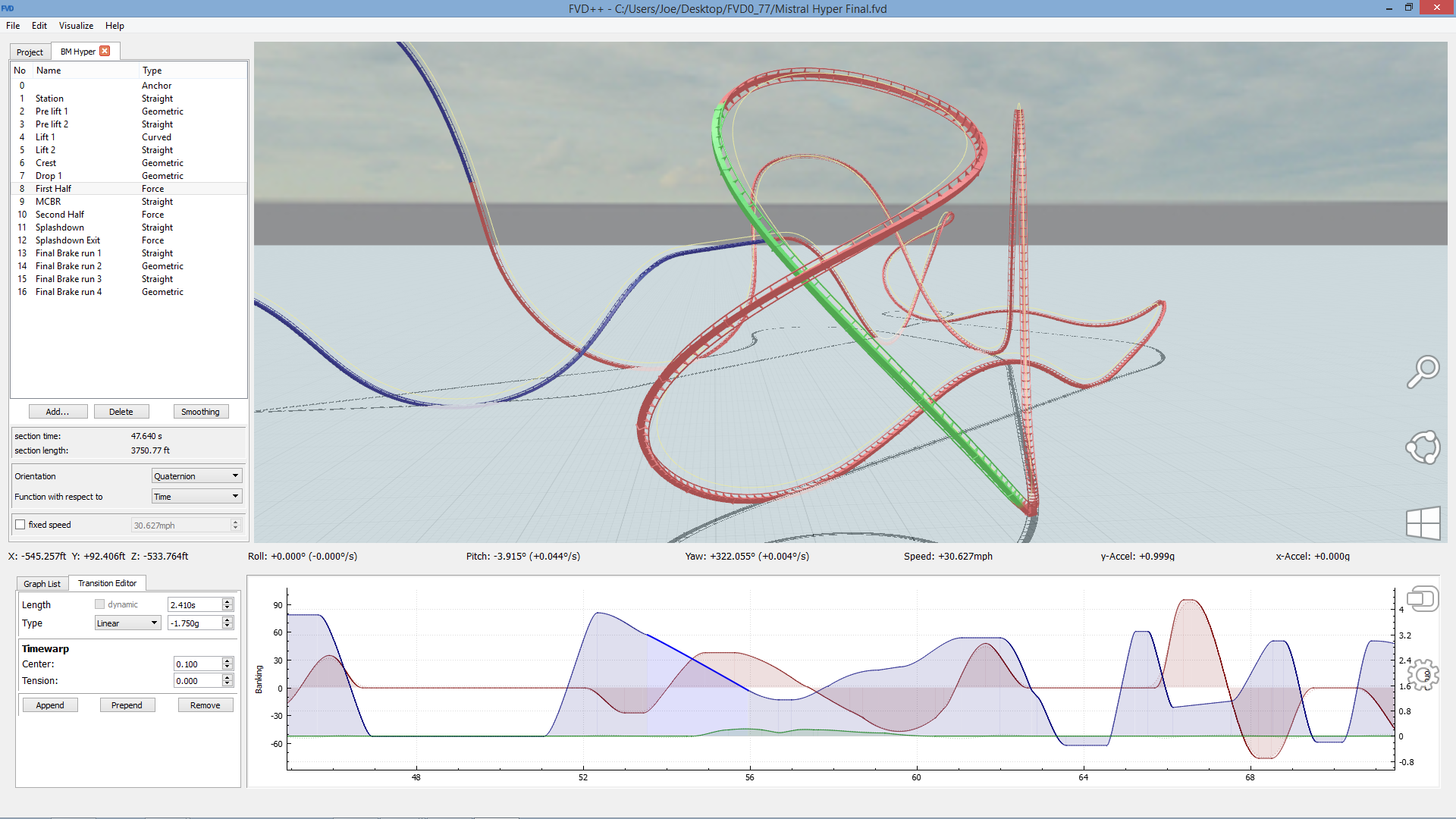
That does look like an ampersand! The only criticism I have is that you have some "double" transitions instead of smooth ones. You see how there is kind of a kink in the normal force graph around 63 seconds? I think that is not the ideal way to do it. It's like being Newton-y but with force rather than roll. Super hard to avoid, I know...
And is that supposed to be a best of B&M? I see a treble clef and Fury's "barrel turn" in the background!
Oh I think my mistake was that I always used Euler Orientation instead of Quaternion for shaping an Ampersand because I though it'd be better to use it since it has helix-characteristics. Let me try that again :D

For FVD++ I never use Euler anymore like newton
^^^The double transition you mentioned at 63 seconds was actually intentional, and was done to create a small flat-ish section on the entrance of the speed hill where a trim brake is used.
JoeLimits2 posted on January 23rd, 2018
^^^The double transition you mentioned at 63 seconds was actually intentional, and was done to create a small flat-ish section on the entrance of the speed hill where a trim brake is used.
I have no doubt that you meant to put it there, but I have doubts that it would appear in a professional design. That said, my designs either have the occasional inflection points (the "kinks") like that or have sections that I did not design as I had hoped because I tried to avoid such an inflection point. They're just so hard to avoid, but it's the same idea as with roll transitions. Roll in Newton would have consecutive symmetric quartic transitions in opposite directions, but in FVD++, we can use three cubic sections and avoid the inflection point between rolling and rolling back.
SUGGESTION FOR THE THREAD:
The tri- and quad-rail tracks have rotational symmetry, which makes it hard to tell what's going on when you post pictures. I suggest a remedy: even if you want to work with a different track style in FVD++ and eventually in NL2, my idea is that we all post images using non-symmetric track such as B&M of Intamin double spine. Disabling wireframe also helps for screenshots, though I know that some video cards are not compatible.
I bring this up because I have no idea what the banking is like in Emonadeo's Stengel Dive, and the banking is what separates a Stengel Dive from an airtime hill, right?
Thoughts?
Since everyone else is showing off their ampersands, I might as well post my take on it as well. :D

Opinions?


^What are the G's on the first drop? Looks really (maybe too) intense.
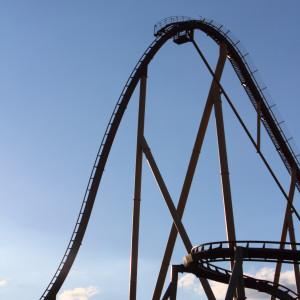
Working on a Intimidator turnaround and need some critique here or help simplifying this. I'm using a quaternion force section and currently using cubic for the roll graph.


Here is some information about "Curved"-Sections in FVD++.
The radius is not the radius of the heartline but rather the radius of the rails as seen in this picture. Both visible tracks have the same radius of 4m however you can clearly see how the heartlines (yellow) differ. Also, notice how the rails overlap perfectly. Keep this in mind when choosing the radius for example for lift pull-ups and pull-outs when using real-life data which are often going from the heartline.

Hi guys. I’ve been away from FVD++ for a few months but coming back has been enjoyable. If I remember, there was a “roll back to 0” option for roll transitions. I know it was experimental but has that feature been removed? If so, any best practices out there for getting track back to flat between elements or before brake runs? Thanks!
Yup, that got removed. You might want to try using a quartic transition instead and do trial and error to get it to 0
Got it. Good recommendation. Thanks!
Yeah I remember that feature being really glitchy and causing FVD++ to crash if you extended the roll graph beyond the normal / lateral force graphs. I rarely used it anyway because I felt I had a lot more control just using a quartic transition and doing some trial and error from there. :P
Working on a B&mish element. I started learning FVD a few weeks ago so maybe it needs some improvements on the transitions :

EDIT: another point of view, we have a better view of the exit of the element

Nope, that's not it. Nice ride though. There's a good example of a Stengel dive at 56 seconds on this video. I can usually get something that rides like a Stengel dive but looks a little weird - almost a combination of a wave turn and the dive.